
 Calm & stressSave 20%
Home / Ingredients
Ingredients & research
Each formula is built around one hero herb. Here is every ingredient we use, the amount, why it is in the formula, and the published research behind it.
The research
Peer-reviewed, public studies and government overviews for every ingredient in our six formulas, with a link to each original.
The hero herb in both moringa formulas: whole dried leaves of Moringa oleifera. The leaf is naturally rich in plant protein, vitamins, minerals and antioxidant polyphenols, which is why it is often called a superfood.*
Found in: Moringa Capsules, Moringa Powder
Jed W. Fahey, Sc.D., of Johns Hopkins reviews the published evidence on moringa's nutritional value and its many traditional uses, from its vitamins and minerals to its protective plant compounds.
Read the studyAn updated Johns Hopkins review of the scientific literature on moringa, describing its nutrient-dense leaves and its unique glucosinolates, plant compounds with antioxidant and cytoprotective activity.
Read the studyJohns Hopkins researchers identified the glucosinolates in leaves, seeds and stems of 12 moringa species and documented strong cytoprotective activity for most of them in laboratory tests.
Read the full study (PMC)Reviews the three main ways moringa leaves contribute to the diet: vitamins and minerals, high-quality plant protein, and glucosinolates, and explains how careful processing preserves them.
Read the studyWomen eating moringa leaf powder showed higher serum retinol, vitamin C, glutathione peroxidase and superoxide dismutase and lower malondialdehyde (an oxidative stress marker) than the unsupplemented group. no placebo and open design. Participants: postmenopausal women (India).
Read on PubMedParticipants taking the leaf extract showed better push-up and treadmill-endurance results and improved serum antioxidant markers (lower malondialdehyde, higher glutathione peroxidase) compared with placebo. Participants: healthy young men.
Read on PubMedLeaf preparations showed a high degree of safety in animal studies and no adverse effects were reported in the human studies reviewed. Participants: review (human and animal data).
Read on PubMedThe hero ingredient of our green formula. This blue-green algae naturally provides plant protein with essential amino acids, iron, B vitamins and antioxidants that support daily energy and vitality.*
Found in: Spirulina
Men taking spirulina showed a small increase in exercise output and better scores on a mental-fatigue test and on self-rated physical and mental fatigue compared with placebo. Participants: healthy men.
Read on PubMedWhy it is there: a concentrated spirulina extract standardized to 4% phycocyanin, the blue pigment behind much of spirulina's antioxidant activity. It delivers more of spirulina's active compounds in a smaller amount than the powder alone.*
Found in: Spirulina
The phycocyanin-enriched spirulina extract was well tolerated over 4 weeks, with clotting and platelet markers unchanged, and participants reported less everyday pain than with placebo. Participants: adults (men and women).
Read on PubMedWhy it is there: a second green microalga that complements spirulina with its own chlorophyll, protein and antioxidants, and supports healthy digestion.*
Found in: Spirulina
Participants taking chlorella showed greater increases in natural killer cell activity and in interferon-gamma, IL-1beta and IL-12 than those on placebo. Participants: healthy adults (Korea).
Read on PubMedAfter chlorella, blood lactate was lower and O2 pulse was higher during cycling compared with placebo. Participants: healthy young adults.
Read on PubMedWhy it is there: a prebiotic fiber from chicory root. It feeds the beneficial bacteria in your gut, supports digestive health and regularity, and can help the body absorb minerals such as calcium and magnesium.*
U.S. Food and Drug Administration: Questions and Answers on Dietary Fiber
Chicory inulin-type fructans increased gut Bifidobacterium compared with control and were associated with better bowel-function measures in healthy people. Participants: all ages, including healthy individuals.
Read on PubMedInulin produced a modest shift in overall gut microbiota, with specific changes in Bifidobacterium, Anaerostipes and Bilophila; lower Bilophila was linked to softer stools and better constipation-related quality of life. Participants: healthy adults with mild constipation.
Read on PubMedBoth 3 g and 7 g/day of chicory inulin-type fructans increased Bifidobacterium compared with control bars, without differences in GI symptoms. Participants: healthy adults with low habitual fiber intake.
Read on PubMedThe most consistent change after inulin was an increase in Bifidobacterium, along with increases in Anaerostipes, Faecalibacterium and Lactobacillus and a decrease in Bacteroides. Participants: adults.
Read on PubMedThe hero herb: organic Withania somnifera root, an adaptogen used for centuries in Ayurveda. It supports a sense of calm and the body's natural response to everyday stress.*
Safety note. NCCIH notes a number of cases linking liver injury to ashwagandha supplements (rare). Ashwagandha should be avoided during pregnancy and not used while breastfeeding. NCCIH advises against use by people with autoimmune or thyroid disorders and before surgery. It may interact with medications for diabetes, blood pressure, thyroid, seizures, sedatives and immunosuppressants. Possible side effects include drowsiness, stomach upset, diarrhea and vomiting. (The NIH ODS ashwagandha fact sheet could not be fetched because of a bot-protection block, so it is not cited.)
Found in: Ashwagandha
Across pooled trials, participants taking ashwagandha reported lower stress and anxiety scores than those taking placebo, with the stress effect seen at 300-600 mg/day of extract. Participants: Adults aged about 25-48 years.
Read on PubMedAshwagandha extract had a small but statistically significant effect on overall sleep compared with placebo. Participants also reported better mental alertness on rising. The effect was larger in adults with diagnosed insomnia, at doses of 600 mg/day or more and over 8 weeks or longer. Participants: Adults 18+, including healthy adults and adults with insomnia.
Read on PubMedCompared with placebo, participants taking ashwagandha had a significant reduction in HAM-A anxiety scores and greater reductions in morning cortisol. Participants: Healthy adults with self-reported high stress.
Read on PubMedParticipants taking ashwagandha reported lower stress, anxiety and low-mood scores than those taking placebo, with a dose-response relationship for stress. Participants: Adults.
Read on PubMedWhy it is there: KSM-66 is a full-spectrum ashwagandha root extract standardized to 5% withanolides, the root's main active compounds, and one of the most clinically studied ashwagandha extracts. It adds a concentrated, consistent form of the same root.*
Safety note. Same as ashwagandha: rare liver injury reports. Avoid during pregnancy and breastfeeding. Not advised for people with autoimmune or thyroid disorders or before surgery. Possible drug interactions with medications for diabetes, blood pressure, thyroid, seizures, sedatives and immunosuppressants.
Found in: Ashwagandha
Participants taking KSM-66 had significantly lower scores on all stress-assessment scales and lower serum cortisol than the placebo group at day 60. Adverse effects were mild and similar to placebo. Participants: Adults with a history of chronic stress.
Read on PubMedBoth dose groups had significantly lower Perceived Stress Scale scores and serum cortisol than placebo, and reported better sleep quality. Participants: Healthy stressed adults (PSS score above 20).
Read on PubMedAlongside an 8-week resistance-training program, men taking KSM-66 had significantly greater increases in bench-press and leg-extension strength and in arm and chest muscle size than men taking placebo. They also had lower exercise-induced creatine kinase. Participants: Healthy young men (18-50) with little resistance-training experience.
Read on PubMedParticipants taking KSM-66 had a greater increase in VO2 max at 8 and 12 weeks than the placebo group. They also reported greater improvements in quality-of-life scores. Participants: Healthy athletic adults (men and women).
Read on PubMedWhy it is there: an amino acid found naturally in green tea leaves. It promotes relaxation without drowsiness and supports a calm, focused state of mind, which pairs well with ashwagandha.*
Found in: Ashwagandha
After a single dose, participants taking L-theanine had faster reaction times on an attention task (Stroop) and made fewer omission errors on a working-memory task than the placebo group. Participants: Healthy Japanese adults aged 50-69 (MMSE-J score 24 or higher).
Read on PubMedDuring the L-theanine period, participants reported lower stress-related symptom scores (trait anxiety, mood questionnaire) and better Pittsburgh Sleep Quality Index scores, and they scored higher on verbal fluency and executive function tests than during the placebo period. Participants: Healthy adults without major psychiatric illness (mean age 48).
Read on PubMedCompared with placebo, 100 mg and 200 mg single doses of L-theanine improved simple reaction time. Participants: Healthy young adults.
Read on PubMedL-theanine was associated with small improvements in self-reported time to fall asleep, daytime dysfunction and overall sleep quality scores. Participants: Humans of all ages and health statuses (mixed healthy and clinical populations).
Read on PubMedThe hero herb: an Arctic adaptogenic root, standardized to 3% rosavins so every capsule is consistent. It supports the body's ability to adapt to physical and mental stress, and helps with occasional fatigue and mental focus.*
Safety note. NCCIH: rhodiola is possibly safe for up to 12 weeks. Side effects may include dizziness, headache, insomnia, and dry mouth or excess saliva. Interactions with losartan (a blood pressure drug) have been reported. Little is known about safety during pregnancy or breastfeeding.
Found in: Rhodiola
Participants reported improvements in stress symptoms, fatigue and daily functioning on several questionnaires, starting within 3 days and continuing through week 4. Adverse events were mostly mild. Participants: Adults reporting life-stress symptoms.
Read on PubMedCompared with controls, participants taking rhodiola reported lower anxiety, stress, anger, confusion and low-mood scores at 14 days. Participants: Mildly anxious adults (self-reported; not a diagnosed condition).
Read on PubMedRhodiola was associated with small-to-moderate improvements in VO2 max, time to exhaustion and time-trial performance. It was also associated with higher antioxidant markers and lower creatine kinase and lactate. Participants: Healthy participants, mean age 22.
Read on PubMedWhy it is there: whole organic rhodiola root powder adds the full spectrum of compounds found in the root alongside the standardized extract.*
Found in: Rhodiola
Why it is there: piperine from black pepper supports the absorption of nutrients in the digestive tract and helps the other ingredients in the capsule get absorbed.*
Found in: Rhodiola
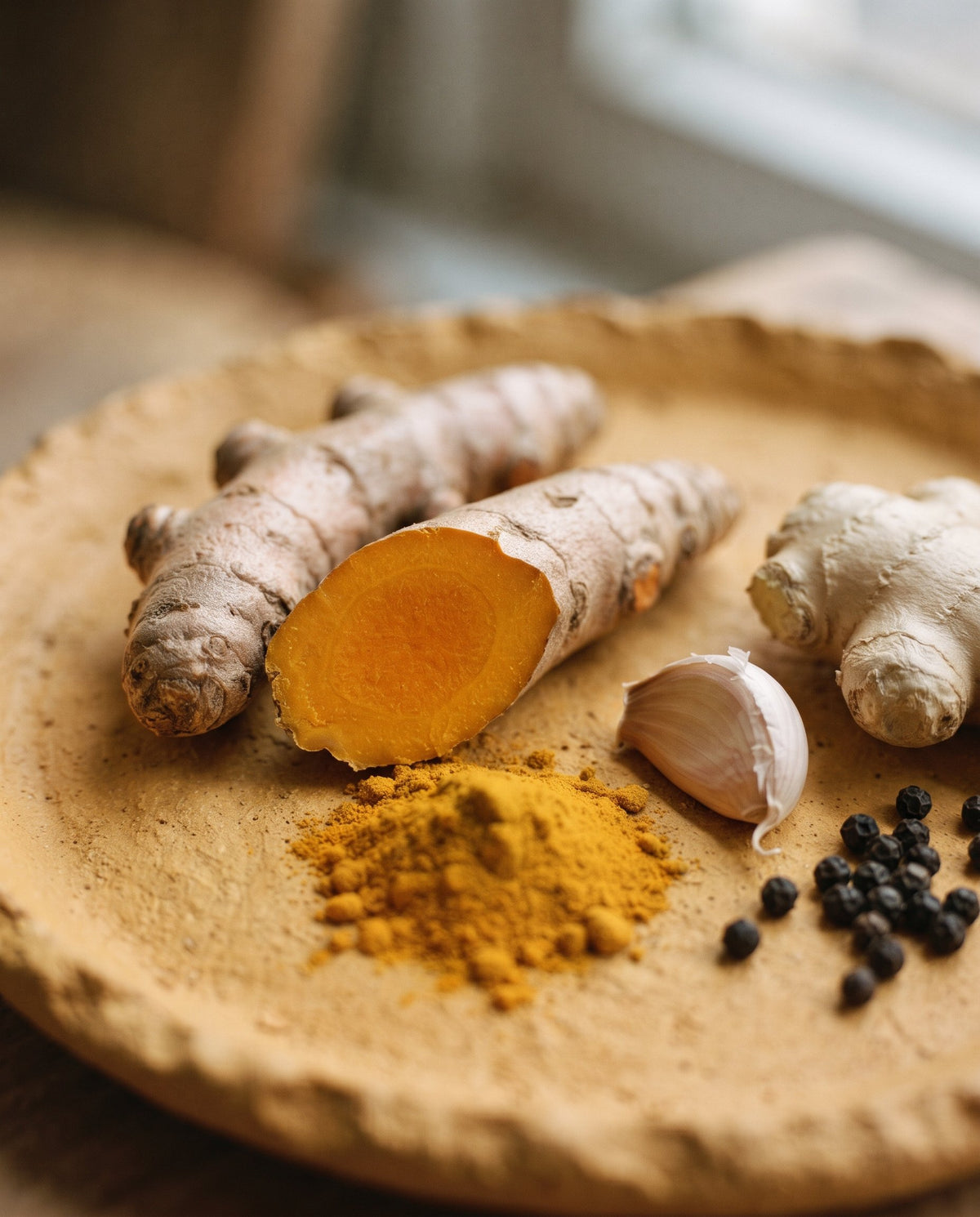
The hero herb: turmeric root extract standardized to curcuminoids, the active compounds of turmeric. Curcumin is a powerful antioxidant that supports a healthy inflammatory response and joint comfort.*
Safety note. NCCIH says conventionally formulated oral turmeric/curcumin is likely safe at recommended amounts for up to 2-3 months; side effects can include nausea, acid reflux, stomach upset, diarrhea or constipation. Highly bioavailable curcumin formulations (including those combined with piperine) may harm the liver: liver damage has been reported in some people using them; stop and contact a provider if fatigue, nausea, poor appetite, dark urine or jaundice appear. Turmeric supplements may be unsafe in pregnancy. Anyone taking medicines should talk to a health care provider first because some herbs and medicines interact. NCCIH also notes evidence is insufficient for most uses.
Found in: Turmeric
Pooled trials found that adults taking curcumin reported lower muscle-soreness scores and had lower creatine kinase (a marker of muscle stress) after strenuous exercise than with placebo. Participants: Adults performing muscle-damaging exercise (trained and untrained).
Read on PubMedParticipants reported moderately less muscle pain 24-48 hours after unaccustomed eccentric leg exercise and showed a small improvement in jump performance compared with placebo. Participants: Healthy young men.
Read on PubMedCompared with placebo, participants performed better on sustained-attention and working-memory tasks and reported less fatigue after 4 weeks. Participants: Healthy adults aged 60-85.
Read on PubMedSummarizes human studies on curcumin's antioxidant activity and its role in exercise recovery and muscle soreness in active people, and notes that curcumin alone is poorly absorbed unless combined with enhancers such as piperine. Participants: Review (mixed populations).
Read on PubMedWhy it is there: organic garlic bulb powder, rich in natural sulfur compounds such as allicin. It adds antioxidant support and completes the four-part turmeric complex.*
NIH National Center for Complementary and Integrative Health (NCCIH): Garlic: Usefulness and Safety
Safety note. Oral garlic has been used safely in studies lasting up to 7 years. Side effects include breath and body odor, abdominal pain, flatulence and nausea; some people are allergic. Garlic supplements may increase the risk of bleeding, so tell providers before surgery, and talk with a provider before use if taking anticoagulants, aspirin or other medicines. Amounts above food levels may not be safe in pregnancy or breastfeeding. NCCIH notes very little research on immune function.
Found in: Turmeric
Why it is there: a warming root from the same plant family as turmeric. Ginger supports healthy digestion and adds its own antioxidant compounds, gingerols, to the formula.*
NIH National Center for Complementary and Integrative Health (NCCIH): Ginger: Usefulness and Safety
Safety note. Oral ginger can cause abdominal discomfort, heartburn, diarrhea, and mouth or throat irritation. Ginger supplements may be safe in pregnancy but a provider should be consulted first; little is known about use while breastfeeding. Anyone taking medicines should check with a provider because some herbs and medicines interact.
Found in: Turmeric
Participants taking ginger reported about 23-25% less muscle pain 24 hours after elbow-flexor eccentric exercise than with placebo. Participants: Healthy adult volunteers.
Read on PubMedAfter ginger, the stomach emptied a test meal about twice as fast as after placebo and showed more frequent antral contractions. Participants: Healthy volunteers.
Read on PubMedWhy it is there: curcumin on its own is poorly absorbed. Black pepper contains piperine, which research shows can increase how much curcumin the body absorbs, so a small amount is added to help the turmeric work.*
Safety note. NCCIH states that combining curcumin with piperine from black pepper is one way to improve curcumin's bioavailability, and that highly bioavailable curcumin formulations may harm the liver; liver damage has been reported in some people using them. NCCIH has no stand-alone black pepper page. Talk to a provider before use if taking medicines (piperine is known to inhibit drug-metabolizing pathways such as glucuronidation, per Shoba 1998).
Found in: Turmeric
In humans, curcumin alone gave undetectable or very low blood levels, while adding 20 mg piperine raised curcumin bioavailability by about 2000%, with no adverse effects reported at these doses. Participants: Healthy human volunteers (plus a rat arm).
Read on PubMedExplains that curcumin's low blood levels stem from poor absorption, rapid metabolism and rapid elimination, and lists adjuvants such as piperine (which interferes with glucuronidation) among the main strategies to improve absorption. Participants: Review.
Read on PubMedReviews how low intestinal absorption and extensive liver metabolism limit oral curcumin, and how metabolism-inhibiting adjuvants and newer delivery systems can extend its time in plasma. Participants: Review.
Read on PubMedAbout this research. These are independent, peer-reviewed studies on individual ingredients, published by other researchers. They were not conducted on Supreme Herbals products and were not funded by us. Study doses, forms and populations can differ from the amounts in our formulas, and results in a study do not guarantee the same results for you.
We share this literature for general education only. It is not medical advice and is not a claim that any Supreme Herbals product diagnoses, treats, cures or prevents any disease. These statements have not been evaluated by the Food and Drug Administration. Talk to your doctor or pharmacist before taking any supplement, especially if you are pregnant, nursing, taking medication or have a medical condition. Links go to third-party sites; Supreme Herbals is not responsible for their content. See our Health disclaimer.
The formulas
Calm & stressSave 20%

 Daily nutritionSave 20%

 Daily nutritionSave 20%

 Energy & greensSave 20%

 Joints & mobilitySave 20%

 Calm & stressSave 20%